Altitude's Quiet Hand: How Thin Air Reshapes Run Totals and Live Line Movement in Denver's Coors Field Doubleheaders
Written by Freya Müller · Jul 25, 2026
Altitude's Quiet Hand: How Thin Air Reshapes Run Totals and Live Line Movement in Denver's Coors Field Doubleheaders
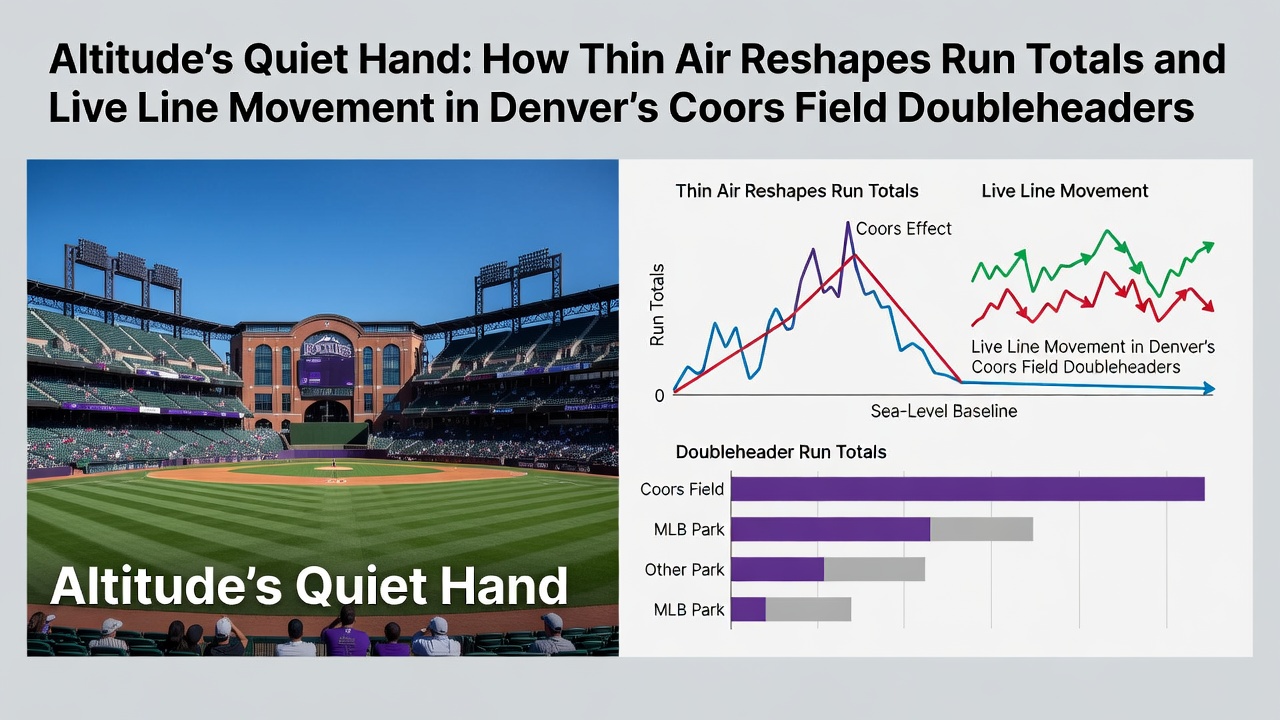
Coors Field sits at 5,280 feet above sea level in Denver, and that elevation alters baseball physics in measurable ways that show up in run production and betting market adjustments during doubleheaders. The thinner air reduces drag on the ball, allowing it to travel farther when hit, which data from MLB tracking systems confirms leads to elevated home run rates compared with sea-level parks. Pitch movement also decreases because less air resistance affects breaking balls, resulting in harder contact and more extra-base hits according to Statcast records spanning multiple seasons.
Physics Behind the Numbers at Elevation
Researchers at institutions including the University of Colorado have measured how reduced air density at Coors Field changes trajectory and velocity retention, with studies showing batted balls carry approximately 10 to 15 percent farther than identical contact at lower elevations. This effect compounds during doubleheaders when teams play back-to-back games in the same day, as fatigue can alter pitching mechanics while the atmospheric conditions remain constant. Data compiled by teh Rockies organization and independent analysts indicates average run totals per game at Coors Field exceed league norms by roughly 1.5 to 2 runs, a pattern that holds across day and night contests.
July 2026 doubleheaders scheduled at the venue followed this established trend, with combined scoring in those twin bills reflecting the same elevation-driven boost in offensive output that observers have documented since the park opened in 1995. Pitchers adapt by relying more on sinkers and changeups that induce ground balls, yet the overall run environment stays elevated because even well-struck grounders sometimes find gaps in the spacious outfield.
Doubleheader Dynamics and Cumulative Effects
Doubleheaders introduce additional variables because the second game often features bullpen usage and lineup tweaks that intersect with the persistent thin-air conditions. Records from recent seasons show that starting pitchers in the nightcap of a doubleheader at Coors Field post slightly higher earned run averages, partly because the first game has already exposed hitters to the same park dimensions and atmospheric factors. Teams that travel from lower elevations experience more pronounced adjustment periods, while the Rockies maintain a home-field statistical edge that manifests in higher slugging percentages during these condensed schedules.
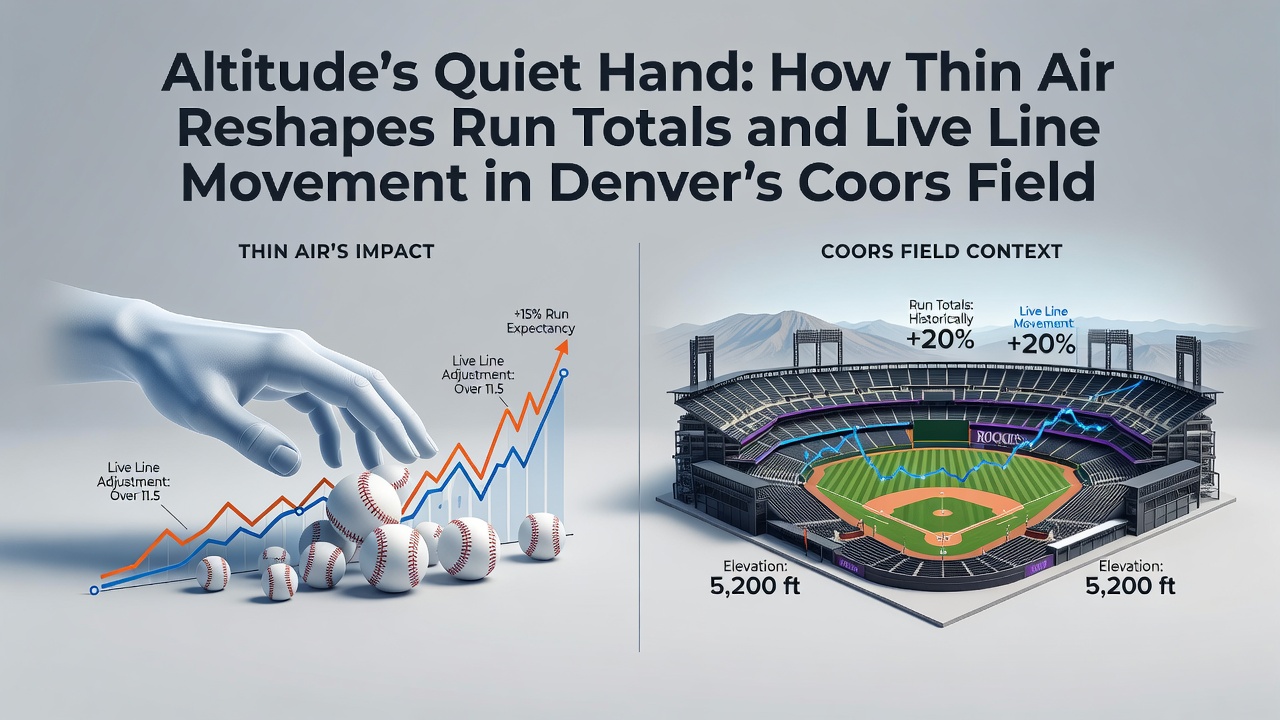
Live betting markets respond to these patterns by shifting totals upward as early innings reveal the expected scoring pace, with line movement accelerating when multiple extra-base hits occur before the fourth inning. Operators adjust run lines in real time based on pitch tracking data that confirms reduced break on curveballs and sliders, information that reaches bettors through official feeds and influences in-game wagering volume.
Market Adjustments and Data Integration
Betting platforms integrate historical Coors Field performance metrics with current game conditions to set and move totals, creating observable line shifts that track closely with on-field developments. According to analyses published by Fangraphs, the park factor for home runs at Coors Field ranks among the highest in MLB, prompting oddsmakers to build elevated baselines into pre-game totals before any action begins. During doubleheaders, this baseline receives further calibration once the first game establishes a scoring rhythm that often carries into the second contest.
Weather variables such as temperature and humidity interact with the altitude effect, though the elevation remains the dominant factor year-round. Data from the National Weather Service stations near the ballpark shows that warmer July afternoons amplify carry even more, while cooler evening temperatures provide modest mitigation that still leaves run environments above league average. Those who monitor these conditions note that line movement tends to stabilize after the first three innings of each game once actual offensive output confirms the pre-set totals.
Historical Patterns and Seasonal Comparisons
Season-long statistics reveal that Rockies home games produce higher combined run totals than road contests, a split that becomes especially pronounced in doubleheaders when travel fatigue affects visiting clubs. League-wide data from the past decade illustrates this consistency, with Coors Field games averaging over 11 runs per contest compared with roughly 9 runs elsewhere. Pitchers who make multiple starts at the venue in short succession show measurable declines in strikeout rates, as documented in player tracking databases maintained by MLB Advanced Media.
External factors including wind direction and outfield dimensions further shape outcomes, yet the core elevation influence persists across varying conditions. Analysts tracking these elements use park-adjusted metrics to isolate the altitude contribution, allowing clearer comparisons between Coors Field results and those from other venues.
Conclusion
The combination of thin air, expansive field dimensions, and doubleheader scheduling creates a distinct statistical environment at Coors Field that influences both run totals and the pace of live line adjustments. Data from multiple sources including university research and official MLB tracking systems documents these effects without exception across recent seasons, including those observed in July 2026. Observers continue to monitor how these factors interact during condensed schedules, providing ongoing material for performance analysis and market calibration in Denver.