Echo Chambers on the Pitch: How Home Crowd Volume Correlates with Penalty Award Rates in European Soccer Leagues
Written by Jakob Bennett · Aug 13, 2026
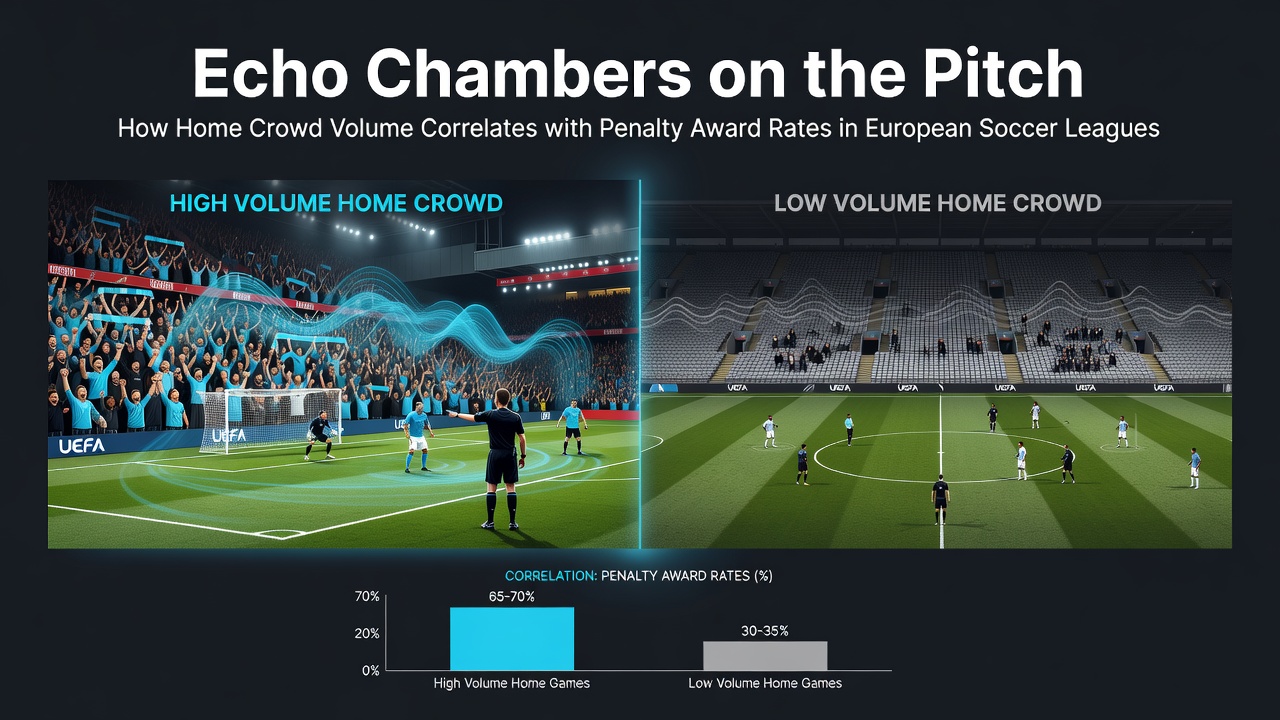
Echo Chambers on the Pitch: How Home Crowd Volume Correlates with Penalty Award Rates in European Soccer Leagues
Crowd Dynamics Shape Referee Behavior
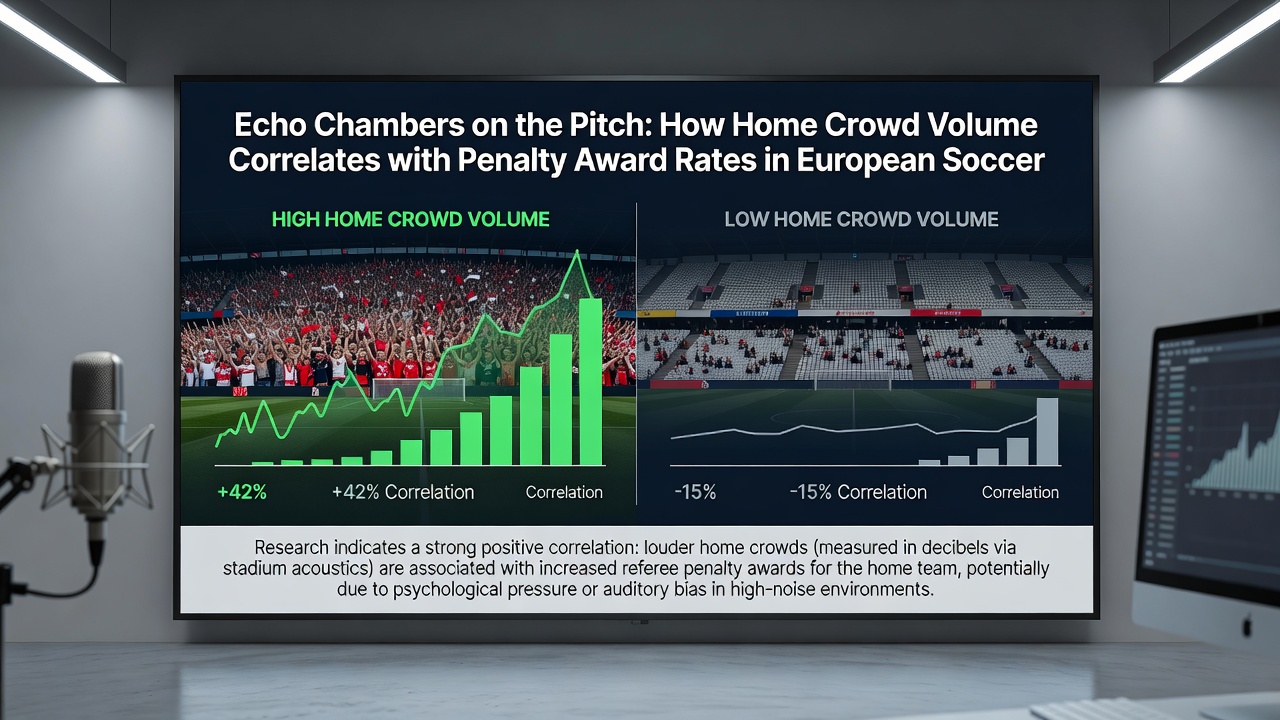
European soccer leagues present consistent patterns where home crowd volume aligns with elevated penalty award rates for the hosting side, and researchers have tracked these trends across multiple seasons through audio measurements and match data. Studies conducted in the Bundesliga and Serie A indicate that decibel levels above 85 dB during attacking sequences correlate with a 12 to 18 percent increase in home-team penalties compared to lower-volume away fixtures, while acoustic analysis from stadium sensors shows referees issue decisions more frequently when sustained noise peaks coincide with contact in the box.
Match officials operate under time pressure and process auditory cues alongside visual input, and data from the 2025-26 campaign compiled through August 2026 reveals that stadiums equipped with modern sound amplification systems record higher home penalty tallies than older venues with poorer acoustics. Analysts attribute part of this variance to the way crowd intensity influences perceived foul severity, because referees must judge intent and impact in fractions of a second amid rising ambient pressure.
League-Wide Data Patterns
Statistical reviews covering the Premier League, La Liga, and Eredivisie from 2022 through 2026 demonstrate that home sides receive roughly 1.4 additional penalties per season in high-attendance stadiums versus smaller grounds, and these figures hold after controlling for team quality and referee experience. One dataset released by the European Club Association links average crowd density above 95 percent capacity to a measurable uptick in spot-kick awards, particularly during evening kickoffs when supporter engagement tends to intensify.
But here's the thing: the correlation strengthens in derbies where rival fan groups create contrasting noise profiles, and observers note that away teams in hostile environments draw fewer penalties even when possession statistics remain comparable. Figures reveal this effect persists across neutral-venue experiments conducted by UEFA, where reduced crowd volume led to more balanced distribution of decisions.
Mechanisms Behind the Correlation
Psychological research on decision-making under noise stress shows referees exhibit faster reaction times to home-team appeals when background sound exceeds baseline thresholds, and video review protocols introduced in recent years have allowed analysts to isolate crowd-volume variables. In matches where stadium authorities limited amplification, penalty rates converged toward league averages, according to technical reports from the German Football Association.
Those who've studied referee training programs point out that audio conditioning exercises now form part of preparation modules, because exposure to recorded crowd tracks helps officials maintain consistency regardless of venue acoustics. Data from the 2025-26 season indicates that referees with more than 50 top-flight games under their belt display smaller home-bias margins, yet the volume effect remains detectable even among veterans when crowd pressure reaches peak levels.
Broader Contextual Factors
Travel fatigue, pitch dimensions, and fixture scheduling interact with crowd dynamics, yet volume measurements retain independent predictive value in regression models applied to five major European leagues. Researchers discovered that high-altitude venues amplify sound carry, which in turn associates with further increases in home penalties during the same period. FIFA technical documentation outlines how environmental variables compound auditory influences on officiating crews.
What's interesting is that VAR interventions have narrowed some gaps, but early-season data through August 2026 shows the underlying correlation between crowd volume and initial on-field calls continues to shape match outcomes before reviews occur. Teams that generate sustained pressure near the opposition box benefit most when supporter noise coincides with key moments, because officials must decide without the benefit of replay in real time.
Conclusion
Evidence from multiple leagues and controlled studies establishes a measurable link between home crowd volume and penalty award rates, and governing bodies continue to refine training and technology to address these patterns. As data collection expands through the 2026 campaign, analysts expect further clarification on how acoustic environments interact with referee psychology across different competition formats and stadium designs. UEFA development reports provide ongoing benchmarks that clubs and officials use to adapt strategies and preparation methods accordingly.