Elite Tennis Players' Schedule Management and Its Effects on Match Set and Game Totals
Written by Ben Becker · Aug 6, 2026
Elite Tennis Players' Schedule Management and Its Effects on Match Set and Game Totals
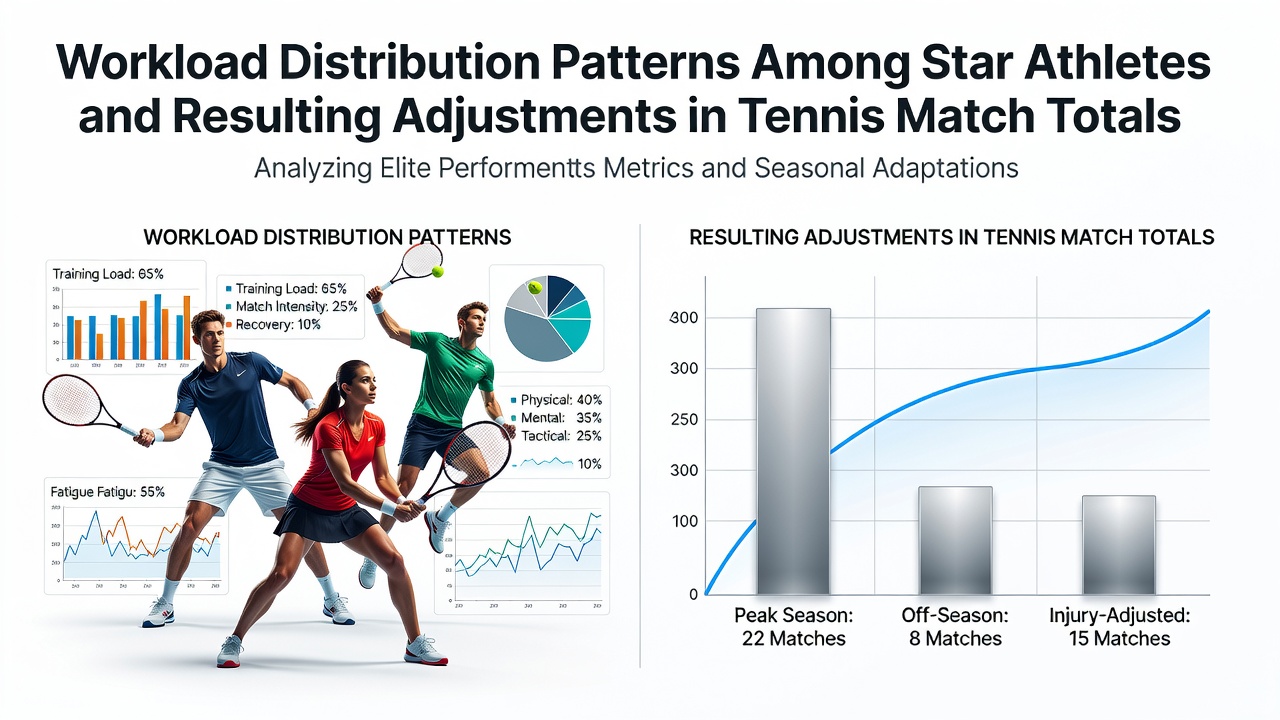
Professional tennis schedules place heavy demands on top-ranked athletes, and data from the ATP and WTA tours show how these players distribute their match loads across the calendar year. Researchers tracking participation rates note that players ranked inside the top ten often compete in 15 to 20 tournaments annually, yet they insert deliberate rest blocks between major events to maintain physical readiness. Such patterns become visible during the North American hard-court swing that peaks in August 2026, when several leading names reduce their pre-US Open commitments to preserve energy for the final Grand Slam of the season.
Match totals adjust accordingly because rested athletes tend to produce longer rallies and more consistent service games. Studies compiled by the International Tennis Federation indicate that players returning from a full week off record higher average point counts per set compared with those coming off consecutive tournament weeks. This difference registers most clearly in best-of-three-set matches on outdoor courts, where fatigue accumulation directly influences the number of games completed before a winner emerges.
Observed Distribution Patterns Across the Season
Analysis of tournament entry lists reveals that star athletes cluster their appearances around the four Grand Slams and the ATP Finals, while filling the remaining schedule with selective Masters 1000 events. Observers note that players frequently skip one or two smaller tournaments immediately after a deep run at a major, allowing recovery time that reduces injury risk and sustains performance levels. During the clay-court portion of the year, several top competitors limit their participation to two or three events before shifting focus to grass, a strategy that keeps weekly match counts below eight for most of the spring.
Those who study player tracking data find that workload spikes occur most often in the first quarter, when the Australian Open and subsequent hard-court events compress the calendar. In contrast, the summer months show more even spacing, with athletes choosing between European clay or North American hard courts rather than attempting both surfaces in quick succession. This selective approach produces measurable shifts in the total games played per match, as fresher athletes maintain higher first-serve percentages and force longer baseline exchanges.
Impact on Set and Game Totals in Live Settings
Betting markets respond to these scheduling choices by recalibrating over/under lines for total sets and total games. When a top seed enters a tournament after a documented rest period, lines on match duration often move upward because statistical models factor in sustained rally lengths and fewer unforced errors. Data from the 2025 season showed that matches involving players with at least six days between events averaged 2.4 sets in best-of-three formats, compared with 2.1 sets for those playing on shorter recovery windows.
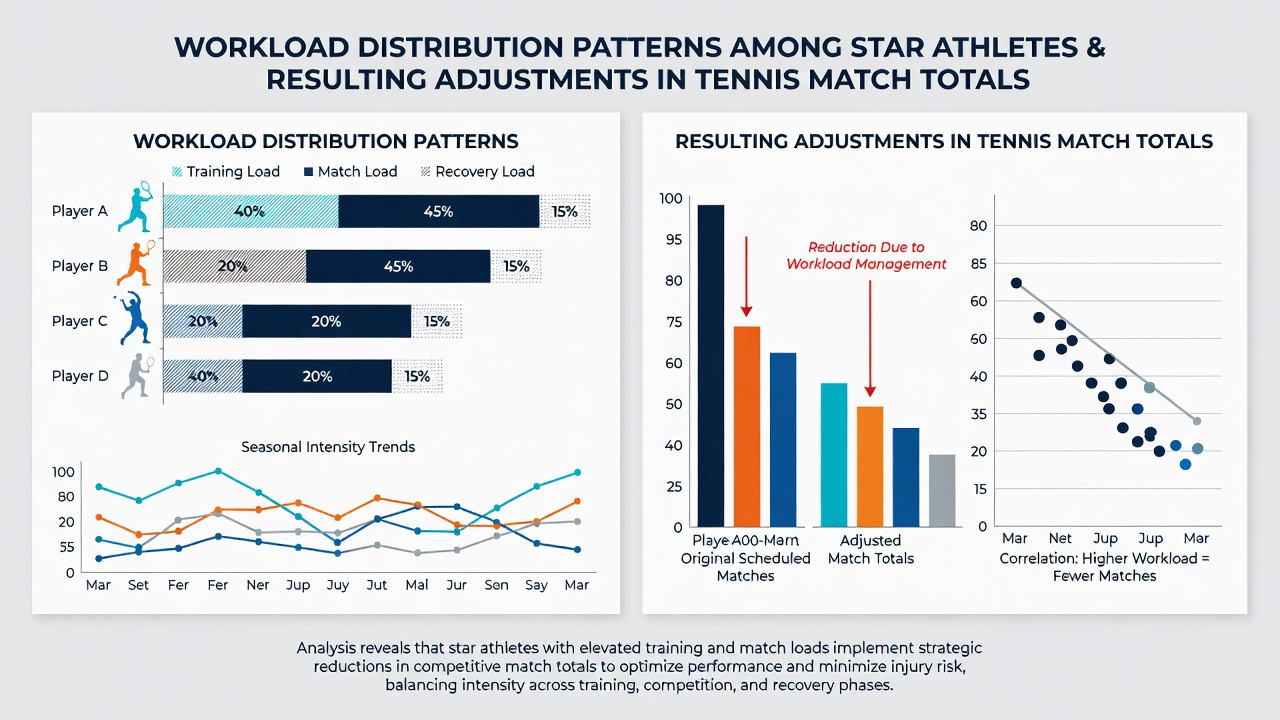
Adjustments become more pronounced in best-of-five-set contests at Grand Slams. Players who reduce their pre-tournament schedule post higher win percentages in deciding sets, which extends overall match length and pushes game totals above historical averages. Tournament directors have responded by tightening qualification draws at some events, thereby protecting main-draw participants from extra matches that could compound fatigue. These structural changes further influence the distribution of workload across the field and alter expected totals for individual encounters.
Regional and Surface-Specific Adjustments
Hard-court events in Asia and Australia during the opening months of the year often feature tighter scheduling clusters, prompting athletes to manage entries more conservatively. European indoor tournaments later in the fall allow greater flexibility because travel distances remain shorter for most competitors. Surface transitions add another layer, since switching from clay to grass within a short window demands additional recovery that many players address by skipping intermediate stops. Each of these choices feeds into updated models that recalibrate projected game counts based on the athlete's recent match volume.
Figures released by the ATP Player Council document that athletes who maintain an average of fewer than six matches per month across the season experience lower withdrawal rates and more consistent performance metrics. These patterns hold across both singles and doubles participants, although doubles specialists sometimes adopt denser schedules because physical demands differ. The resulting adjustments appear in pre-match totals, where operators incorporate historical data on rest intervals to set opening lines that reflect expected duration.
Conclusion
Workload distribution among elite tennis athletes follows identifiable seasonal patterns that directly influence the length and scoring volume of individual matches. Tournament structures, surface calendars, and deliberate rest decisions all contribute to measurable shifts in set and game totals. Ongoing collection of participation and performance data allows for continued refinement of these projections across the professional circuit.