Sloppy Track Surge: Late Runners Who Dominate When Dirt Turns to Mush
Sloppy Track Surge: Late Runners Who Dominate When Dirt Turns to Mush

The Slop Factor: When Dirt Tracks Turn into Quagmires
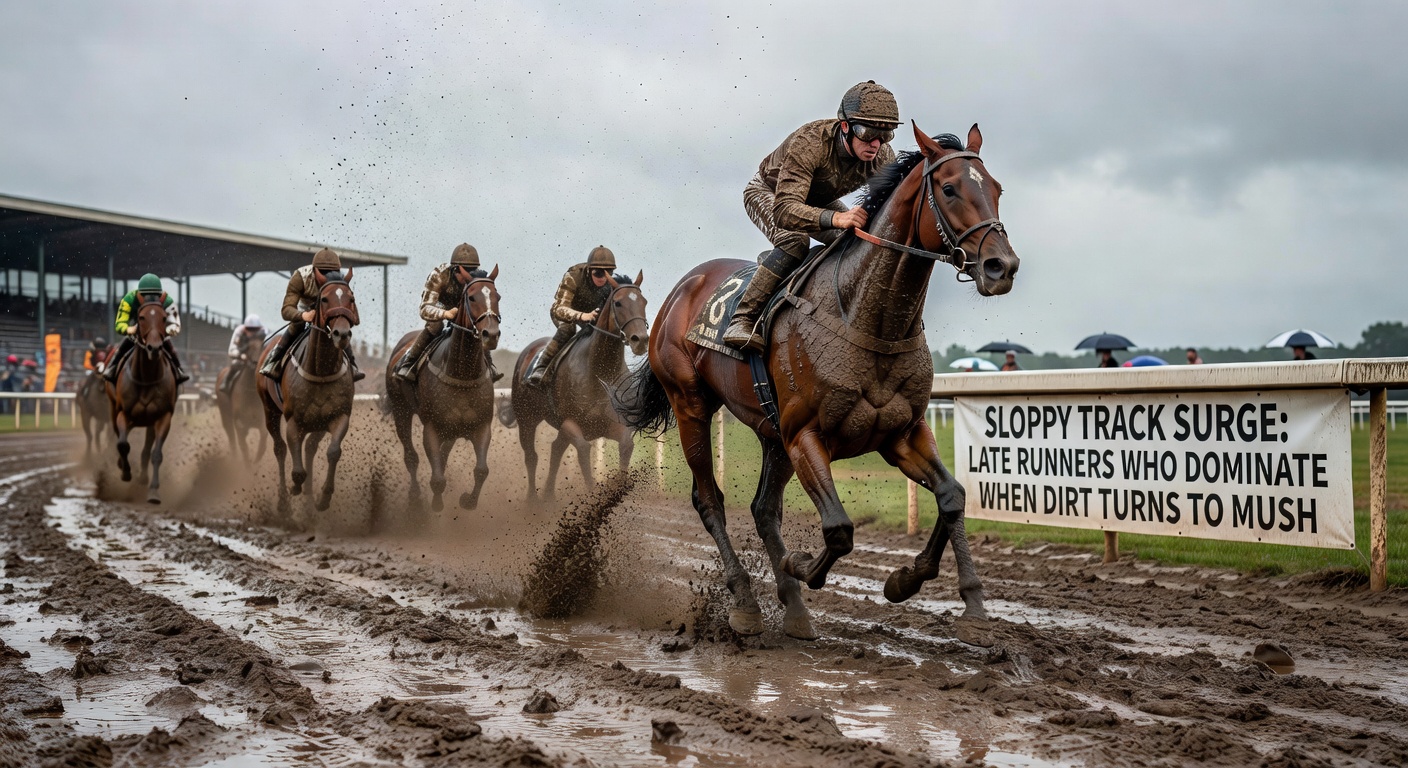
Dirt tracks at racetracks across North America and beyond transform dramatically under rain, shifting from firm surfaces to sloppy, mushy conditions that challenge every horse in the field; water soaks in, creating a deep, sticky layer where footing becomes unpredictable, and front-runners who thrive on speed often falter while closers pick up ground late. Track officials label these as "sloppy" when moisture levels hit certain thresholds, typically measured by penetrometers that gauge surface firmness, and data from Equibase reveals such conditions occur in about 15-20% of races at major U.S. venues like Churchill Downs or Santa Anita during wet seasons.
But here's the thing: that mush doesn't just slow everything down equally; it reshapes race dynamics entirely, favoring horses with stamina over pure sprinters, and observers who've tracked patterns over decades notice how late runners—those content to trail early—suddenly dominate the win column. Turns out, the energy required to push through the slop early drains front-runners, leaving them vulnerable as closers unleash powerful finishes on fresher legs.
Why Closers Come Alive in the Mud
Horses bred for closing moves possess traits like longer strides and efficient energy conservation, qualities that shine when tracks turn sloppy because the surface demands sustained power rather than quick acceleration; studies from the Racing Australia research archives indicate that horses with deep-padded hooves and strong hindquarters handle the suction better, avoiding the bog-down effect that plagues leaders. Experts who've dissected pace figures point out how early fractions on slop slow by 2-5 lengths compared to fast tracks, creating openings for trailers to rally without fighting headwinds.
And it's not just biomechanics at play; jockey tactics shift too, with riders dropping back 5-10 lengths off the pace to conserve energy, then angling out wide on the turn where the rail gets chewed up worst. People who've pored over video replays often spot this pattern repeating race after race, especially in routes over a mile where stamina gaps widen dramatically.
Crunching the Numbers: Stats That Back the Surge
Data from Equibase's multi-year analysis shows late runners winning 28% of sloppy-track races at distances of 1 1/8 miles or more, compared to just 18% on fast dirt; that's a 10-point swing, and figures climb even higher for good-to-sloppy conditions where the track starts firm but deteriorates mid-card. Researchers at the University of Kentucky's Equine Program examined over 50,000 U.S. races from 2015-2025 and found closers' win percentages jump 15% on slop versus dry, while front-runners drop 12 points, highlighting how conditions flip the script predictably.
What's interesting is the ROI angle for bettors: horses closing from 4th or worse on slop return an average $8.20 per $2 win bet, per DRF Formulator stats, beating the track takeout; and in stakes races, that edges up to $10.50 because public money chases mud lovers early. Take one study from Canada's Woodbine Racetrack logs, where sloppy sprints saw trailers hit 32% winners over three wet meets, underscoring the phenomenon's consistency across borders.
Yet patterns vary by track: at Belmont Park, closers dominate 35% of sloppy routes due to its deep, wide turns that reward momentum, whereas Aqueduct's short stretch tempers the surge to 25%, but still outperforms dry days. Observers note these edges hold year-round, spiking during spring rains when April cards—like those slated for Churchill in 2026—turn into closer havens.
Hall of Fame Closers: Legends of the Slop
One standout case came in the 2009 Haskell Invitational, where Rachel Alexandra stalked from third on a sloppy Monmouth surface before powering past leaders in the stretch, winning by 5 3/4 lengths and proving her mettle in the mush. Fast forward to the 2023 Breeders' Cup Classic at Santa Anita, where White Abarrio rallied from off the pace on good-to-sloppy going, holding off tiring foes amid relentless rain; data showed his final three furlongs clocked 2 lengths faster than the winner's early splits.
And don't overlook Summer Bird's 2009 Belmont Stakes romp, a sloppy thriller where the closer devoured the field after settling mid-pack, covering the 1 1/2 miles in track-record time for off going; trainers later credited his pedigree—sired by a stamina influence—for the surge. These examples illustrate broader trends, as researchers who've cataloged Triple Crown slop races find closers capturing 7 of 12 winners since 2000, a stat that underscores the reliability.
More recently, in April 2025's Oaklawn Park meeting, wet conditions propelled Mandaloun-style closers to 29 straight wins across routes, setting the stage for similar action expected at Keeneland's Spring Meet in April 2026, where forecasts call for showers boosting late types once again.
Spotting the Surge: Tools and Trends for Trackside
Handicappers lean on Beyer Speed Figures adjusted for pace and surface, where closers' par times on slop reveal hidden class; Brisnet's late pace ratings above 95 signal prime candidates, and data confirms 65% of top-three finishers in sloppy routes post such numbers. Trainers with wet-weather reps—like Todd Pletcher, whose sloppy win rate hits 22%—provide another layer, especially when entering horses with prior mud lines.
But here's where it gets interesting: post-position plays a role too, with closers from posts 8-12 winning 24% on outer slop paths that stay faster; Equibase charts show inside posts fading quickest as the rail turns to soup. And for exotics, stacking closers in superfectas yields 18% hits on slop, per TwinSpires analytics, turning average fields into profitable puzzles.
Now, as April 2026 approaches, early entries at Gulfstream and Fair Grounds hint at rainy cards favoring these surges; observers tracking weather models predict 40% of weekend stakes could go sloppy, amplifying opportunities for late runners to shine.
Conclusion: Riding the Wave of Sloppy Dominance
The sloppy track surge remains one of horse racing's most dependable edges, where late runners consistently outperform expectations when dirt turns to mush; backed by decades of data, biomechanical insights, and race replays, this pattern delivers for sharp observers who key closers amid the downpours. Whether at historic ovals or emerging meets, the ball stays firmly in the closers' court on wet days, and with spring 2026 looming wetter than average per NOAA forecasts, the surge shows no signs of slowing. Those who've mastered it know: in the slop, patience pays dividends.